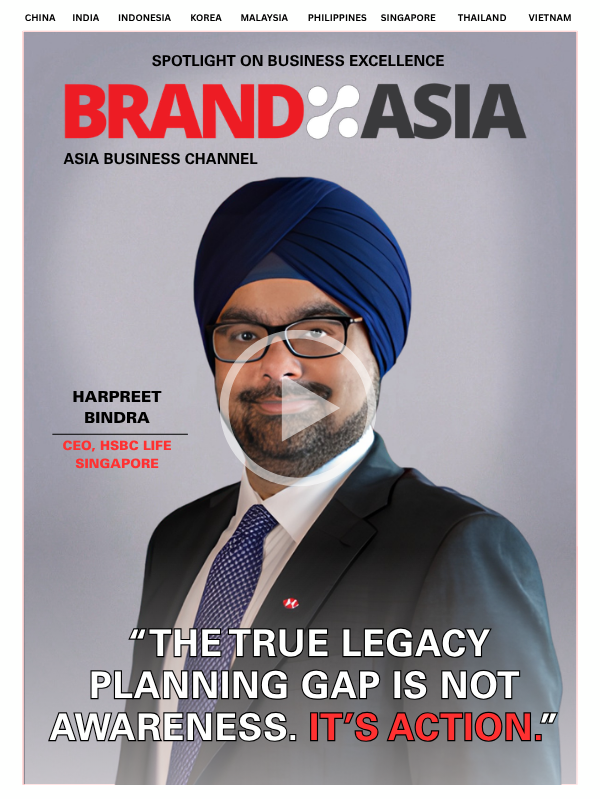
Bridging the Intention-Action Gap: What Singapore’s Wealthy Really Know About Legacy Planning

Share
Asia is entering one of the largest intergenerational wealth transfers in its history. Yet for many high-net-worth individuals, the gap between knowing they should plan and actually doing so remains stubbornly wide. HSBC Life’s new flagship report titled “HNW Legacy Planning: Bridging the Intentions-Action Gap” surveyed 908 high-net-worth individuals across nine Asian and Middle East markets, including 100 in Singapore, to understand the behaviours, priorities, and barriers shaping legacy planning today. The findings offer a revealing portrait of a market that is sophisticated in ambition but still navigating real friction on the path to action.

Singapore’s HNWIs: Architects, Not Reactors
Singapore’s high-net-worth individuals stand apart from their global peers in a meaningful way. Where others may approach legacy planning defensively, Singapore’s wealthy are fundamentally forward-looking. When defining legacy, Singapore respondents place the greatest emphasis on building a financial foundation for multi-generational family wealth (40%) – a constructive ambition rather than a reactive response to circumstance.
This proactive orientation is also reflected in where they are in the planning journey. 45% of Singapore HNWIs already have a formal legacy plan in place, slightly ahead of their global peers (41%). However, 39% are still in the early stages of gathering information, and 16% remain in the thinking phase, suggesting that while intent is high, a significant portion of the market has yet to translate it into structured action. Notably, wealth appears to be an accelerator for taking action: the share of HNWIs with a formal plan rises from 40% among those with USD2-5 million in investable assets to 60% among those with USD5 million or more.

What Starts the Conversation
Understanding what triggers legacy planning is critical to reaching the right people at the right moment. In Singapore, the single most important catalyst is professional advice. 42% of respondents cited advice from a financial advisor, banker, or lawyer as their primary trigger to start or seriously consider legacy planning, significantly ahead of any other factor. This reinforces the important role advisors play in helping HNWIs navigate complexity and translate legacy planning intentions into action.
Their secondary triggers are market volatility and age-related milestones, each cited by 36% of respondents. These triggers actively define the financial strategy that follows. Professional advice leads to a focus on tax minimisation (48%) and wealth protection (45%). Market volatility shifts priorities towards stable growth (42%) and capital preservation (39%). Reaching an age milestone sharpens attention on protecting wealth (44%) and stable, predictable growth (42%). In other words, the trigger does not just initiate the journey. It also shapes the destination.
The Tools They Trust and the Barriers They Face
When it comes to the tools Singapore HNWIs rely on, wills and life insurance policies lead the way, with 49% actively using each. However, the adoption rate for life insurance policies is lower than the global average of 56%, highlighting meaningful room for growth. Insurance is more popular than establishing a trust, which is currently being used by 32% of respondents.
Insurance occupies a particularly interesting position in the Singapore toolkit. Its most appreciated benefit is privacy, with 71% agreeing that insurance offers superior privacy and confidentiality compared to other legacy planning tools. At the same time, respondents say they need greater clarity on how insurance fits into broader wealth transfer strategies, with 59% saying they do not have enough information about how to use insurance for wealth transfer. The challenge is not a lack of interest. It is the need for clearer understanding around how insurance can support legacy planning goals.

The Advisor Dilemma
Singapore’s HNWIs are sophisticated and self-reliant. While independent financial advisors lead as the most influential source of guidance at 47%, personal research follows closely behind at 43%. This highlights that HNWIs value professional expertise, but also prefer to verify the details personally. This duality creates both an opportunity and a demand: advisors must earn the trust of clients who are already highly informed and increasingly capable of questioning what they are told.
The frustrations are clear and consistent. 68% of Singapore HNWIs find it a burden to personally coordinate between their different advisors. Respondents highlight three key concerns: the legacy planning process feels too complex to navigate (46%), financial advisors focus too heavily on products rather than family values (46%), and professional advice lacks fee transparency (43%).
What they want instead is a proactive, orchestrating advisor who simplifies complexity, delivers genuine value, and maintains a living relationship with them long after the policy is signed. 50% want proactive updates from their advisor on how their plan continues to meet their family’s needs, and an equal proportion want access to exclusive value-added benefits as part of the overall experience.
Planning Without Borders
Legacy planning in Singapore is inherently international. 98% of Singapore HNWIs are currently using or strongly considering international financial hubs for their wealth and legacy planning, reflecting how international diversification strategies are increasingly shaping long-term wealth structuring. The top three preferred jurisdictions are the USA (64%), the UK (60%), and Switzerland (58%), with preferences shifting based on age, gender, and wealth level. Younger HNWIs under 50 years old favour a diversified approach across the USA, UK, and UAE, while the over-50 cohort gravitates towards Hong Kong, Switzerland, and the USA as their planning becomes more concrete and their asset structures are more established.

Closing the Gap
The data paints a picture of a market rich in intention but held back by friction. Singapore’s HNWIs know they need to plan, many have already started, and almost all are thinking about how to extend their wealth beyond borders. What they need from advisors, institutions, and the broader financial services ecosystem is clarity over complexity, personalisation over products, and a relationship that feels less like a transaction and more like a partnership. The gap between intention and action is a call for the industry to meet HNWIs where they are, with the depth, simplicity, and trust that this generation of wealth builders demands.
Brought to you by Influential Brands, this article spotlights prominent and progressive companies shaping the future of their industries.
Explore more legacy trends in the HSBC Life HNW Legacy Planning Report and discover how HSBC Life supports HNWIs in navigating evolving wealth, succession and cross-border legacy planning needs at grp.hsbc/legacy
Find out how HNWIs are planning beyond borders at https://www.hsbc.com.sg/wealth/insights/learn-to-invest/meet-life-goals/going-global-the-default-strategy-for-wealth-and-legacy-planning/
Prefer a more immersive experience? Explore the full feature below, complete with clickable links and resources.