Singtel: Building a Business That Empowers Every Generation, Responsibly

Share
For a communications technology group serving over 800 million customers across multiple regions, sustainability is not a choice. It is a strategic necessity. Singtel has long recognised that the challenges shaping our world, from climate change and digital disruption to social inequality and workforce transformation, are not peripheral concerns but material risks that sit at the heart of business resilience and long-term value creation. Anchored in its corporate purpose of “Empower Every Generation,” Singtel’s sustainability strategy is both a commitment to future generations and a blueprint for how the business intends to grow.
Sustainability as a Strategic Foundation
Singtel’s decision to embed sustainability at the core of its strategy was driven by a clear-eyed recognition of the pressures it faces. As a digital enabler, the company carries heightened expectations from customers, regulators, and society to operate responsibly, protect data, ensure reliable services, and contribute meaningfully to communities. Climate change poses tangible operational risks, from increased energy costs and infrastructure vulnerability to potential disruption of network resilience. At the same time, rapid digitalisation and the rise of AI are reshaping workforce capabilities and employee expectations in ways that demand proactive, sustained responses.
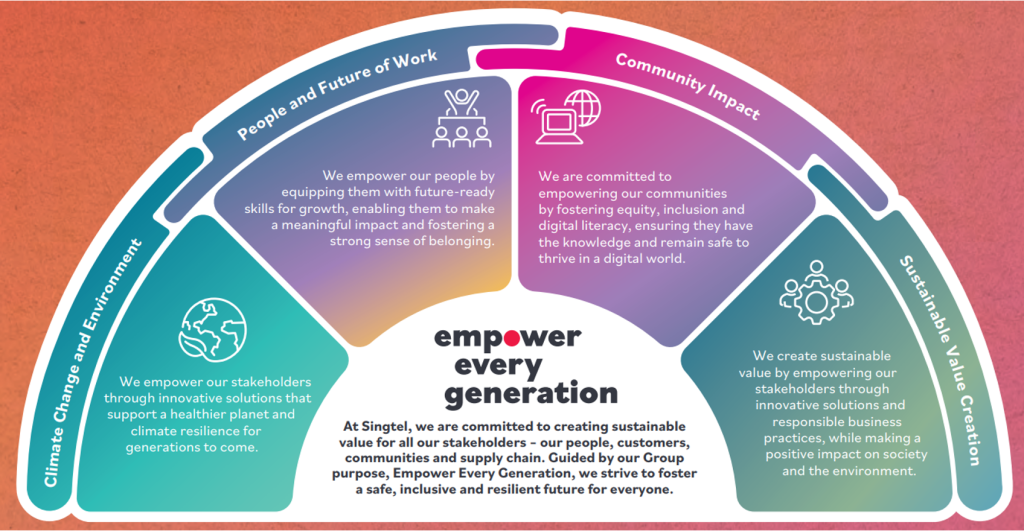
Singtel’s sustainability framework addresses four interconnected challenges: sustaining trusted value creation, managing climate and environmental impact, building a future-ready workforce, and advancing community resilience through digital inclusion and online safety. Together, these pillars ensure that sustainability is not an add-on to the business strategy but an integral part of how Singtel grows and competes.
The 4D Framework: A Blueprint for Net-Zero
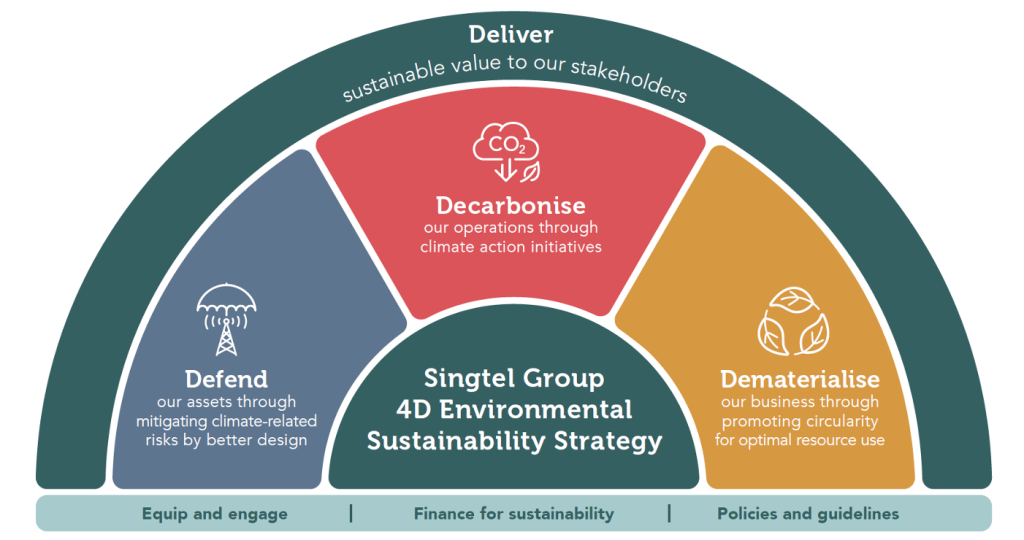
At the centre of Singtel’s sustainability ambition is its net-zero commitment, with a target to achieve net-zero greenhouse gas emissions by 2045. Underpinning this is a set of Science Based Targets initiative (SBTi)-validated interim goals: a 55% reduction in Scope 1 and 2 emissions and a 40% reduction in Scope 3 emissions by 2030 from a 2023 baseline. To deliver on these commitments, Singtel has developed the 4D Framework, a comprehensive, systems-level approach that embeds sustainability into operations, governance, and culture.
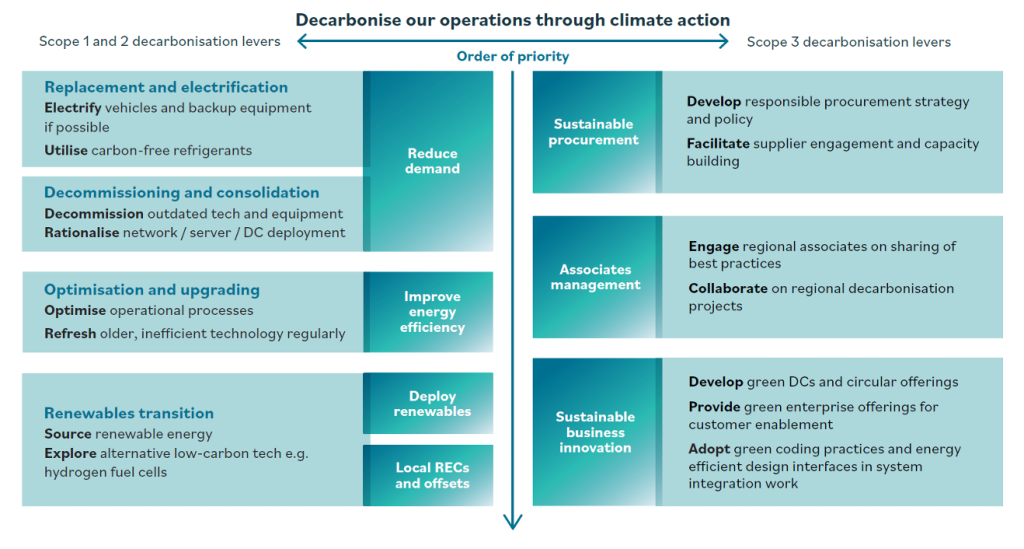
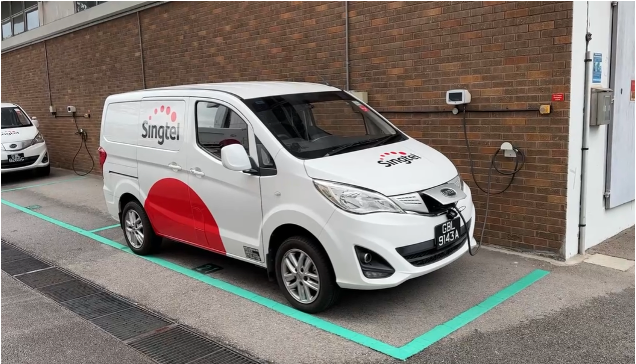
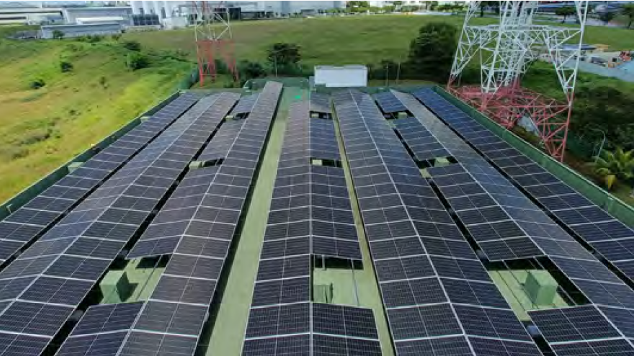
The four pillars work in concert. “Defend” focuses on safeguarding critical infrastructure against climate-related risks through resilient network design and climate-integrated planning. “Decarbonise” drives systematic emission reductions through a structured hierarchy of electrification, asset consolidation, energy efficiency optimisation, and transition to renewable energy, including solar panels now installed at Singtel’s exchanges and data centres, and the progressive replacement of petrol vehicles with electric vehicles. “Dematerialise” promotes circular economy principles through waste reduction, improved water efficiency, sustainable packaging, and device take-back and recycling programmes, supported by e-waste collection drives held both at Singtel offices and in the wider community. “Deliver” ensures accountability through internal carbon pricing, sustainable financing mechanisms, and a governance structure that ties ESG metrics to executive incentives.
Turning Challenges Into Commitments
Implementing sustainability at scale is not without difficulty, and Singtel has been transparent about the challenges it has faced. Managing Scope 3 emissions remains one of the most complex undertakings, given the breadth of suppliers, partners, and regional associate companies across Asia, Australia, and Africa, each at different levels of ESG maturity. Singtel has responded by strengthening its Responsible Procurement Policy, embedding sustainability criteria into sourcing decisions, and investing in digital tools to improve emissions tracking across the value chain.
Balancing decarbonisation with operational resilience presents another inherent tension. As a telecommunications provider, uninterrupted connectivity is non-negotiable. Singtel has addressed this by adopting a structured decarbonisation hierarchy that sequences actions in ways that reduce carbon footprint without compromising network performance. The company also invests in climate-resilient infrastructure design, ensuring that sustainability initiatives strengthen rather than hinder operational capabilities.
Building a Culture That Lives Sustainability
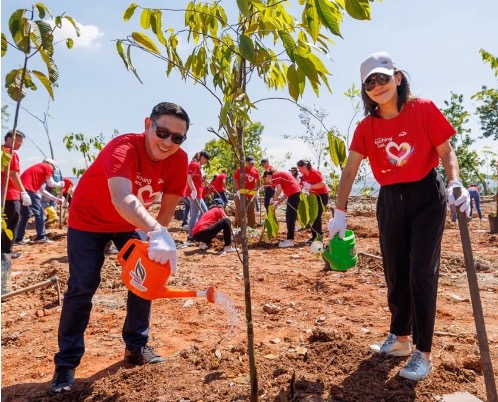
Singtel’s approach to cultural adoption is both top-down and bottom-up. At the leadership level, ESG metrics are tied to executive incentives, embedding sustainability as a core business priority. At the employee level, over 11,000 employees have been trained in sustainability-related programmes, equipping them with the knowledge and confidence to make responsible decisions in their roles. Initiatives such as e-waste drives, tree-planting programmes where more than 200 employees participate annually, and large-scale volunteering efforts enourage hands-on involvement that fosters genuine ownership rather than passive awareness.
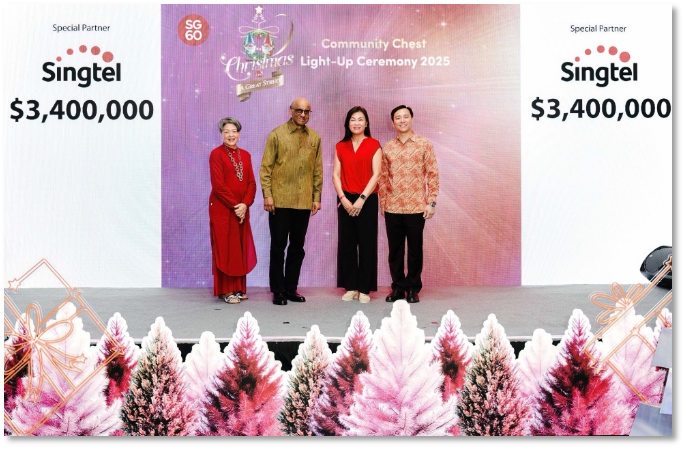
Externally, Singtel extends its sustainability culture through community partnerships and ecosystem collaboration. The Singtel Touching Lives Fund Carnival, the Digital for Life programme supporting seniors with digital skills, and a donation of S$3.4 million to Community Chest in 2025 reflect how the company translates its capabilities into tangible societal impact. Singtel also works to raise standards across its supply chain, embedding human rights, environmental protection, and ethical conduct into supplier engagement to ensure that sustainability is scaled across its entire ecosystem.

Looking Ahead: Growth That Does Not Cost the Future
Singtel’s sustainability priorities for the years ahead are closely aligned with its broader growth ambitions. Accelerating progress on Scope 3 emissions through stronger supplier engagement and improved digital tracking remains a central focus, as does expanding investment in AI, digital, and sustainability capabilities to ensure the workforce stays agile and future-ready. Continued investment in resilient infrastructure, renewable energy, and circular economy initiatives will ensure that operational growth is progressively decoupled from environmental impact.
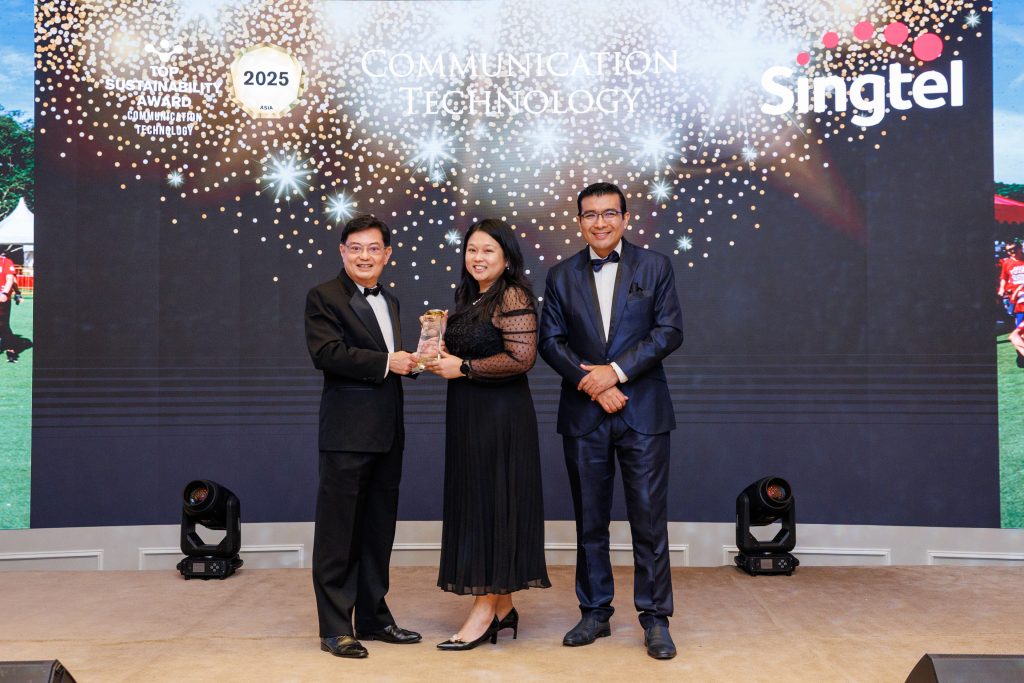
Singtel exemplifies how a company’s core strengths can drive it to achieve recognition as a Top Sustainability Brand. Built on a strong foundation of purpose-driven governance, a comprehensive decarbonisation strategy, and a genuine commitment to community and workforce well-being, Singtel has consistently demonstrated that responsible business practices and long-term growth are complementary and deeply connected priorities. By embedding sustainability into innovation, talent, and operations, Singtel is positioning itself to thrive in a future where the question is no longer whether to act, but how boldly and how swiftly to do so.